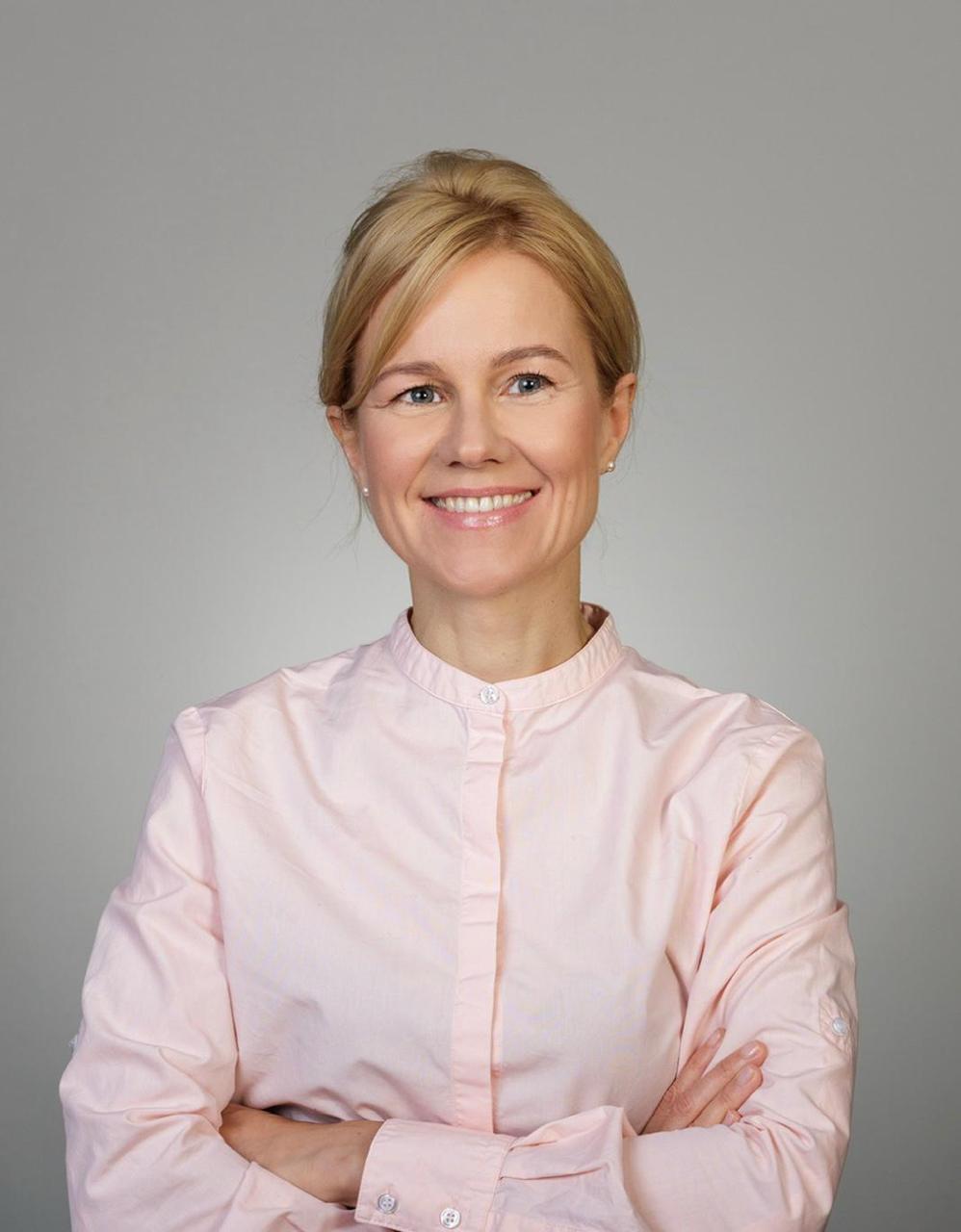
We are excited to share an insightful interview with Eva-Kristiina Ponomarjov, Director General of the Estonian Trade Development Agency at Enterprise Estonia. In this exclusive conversation, Eva-Kristiina discusses Estonia’s dynamic trade landscape, the key strategies driving the country’s economic growth, and the pivotal role of innovation and sustainability in shaping the future of Estonian businesses. Dive into her perspectives on fostering global partnerships and driving international success for Estonian enterprises.
Q1: Give me an introduction about yourself and your role.
Answer:
Okay. I’m the Director of the Estonian Trade Development Agency, which is the governing body for trade under Enterprise Estonia, a government organization.
Everything related to supporting Estonian exporters in expanding into global markets falls under our focus.
Q2: When it comes to trade, how would you describe the relationship between Estonia and Saudi Arabia?
Answer:
Actually, the reason why I’m here at LEAP this time is that we see very rapid growth in Estonian exporters’ interest in Saudi Arabia.
For me, that signals one thing: as a country, we need to be present here—not just by attending trade fairs or missions but by establishing a real presence. That’s why we are seriously considering appointing an expert advisor in Saudi Arabia to support Estonian exporters by having a permanent presence, ensuring daily engagement, and identifying further opportunities to enhance bilateral trade relations.
Q3: What opportunities do you see at LEAP?
Answer:
First of all, when I think about Vision 2030, it’s all about enabling opportunities in digital transformation, sustainability, energy, and various other sectors where Estonia shares similar ambitions.
What has inspired me the most is how much pride you take in Vision 2030. This is also something we consider incredibly important. As a small but highly competitive country, Estonia is digitally boundless. However, when it comes to other sectors, collaboration is more crucial than ever to ensure we grow rapidly alongside global leaders like Saudi Arabia.
Q4: Estonia has more than 10,000 active companies, many of which operate in the Middle East, particularly in Saudi Arabia and the UAE. How do you support these companies?
Answer:
First of all, it starts with providing guidance, which is why we want to establish a local knowledge hub in Saudi Arabia. This will ensure that exporters receive trustworthy, professional advice when entering the market.
Additionally, we organize seminars both in Estonia and Saudi Arabia to facilitate knowledge exchange across different sectors.
We also arrange business missions. This particular visit is a high-level one since the minister is involved, but we also conduct sector-specific business missions tailored to the interests of our companies.
This is not our first year engaging with Saudi Arabia. In fact, we have been working toward building this relationship for several years. However, now we are becoming even more serious because the number of Estonian companies interested in this market is growing significantly. From last year to this year, we have seen the most substantial growth yet.
Q5: Beyond Saudi Arabia and the UAE, what other Middle Eastern markets do you see as potential opportunities for Estonian businesses?
Answer:
In addition to Saudi Arabia and the United Arab Emirates, I know there are ongoing projects in Oman and Qatar. These are the two markets where companies have already found opportunities.
There are already success stories, particularly in supporting public services transformation in these countries. Some projects are currently underway, while others have been successfully completed.
For example, companies like Nortal, which you’ve seen at the Estonian stand, have already been engaged in broader collaborations beyond just Saudi Arabia and the UAE.
Q6: In Estonia, 100% of the companies are private. How would you describe the relationship between the government and the private sector?
Answer:
There’s always a discussion about how connected people are within a country. We often talk about “six degrees of separation,” but in Estonia, it feels more like one degree of separation.
We are such a compact country that it doesn’t take many connections to know a prime minister or the president—maybe just one or two people.
Estonia has been successful in digital transformation because, 20 years ago, our government was ready to operate like a startup. The government recognized the need for innovation and committed to making services simple, secure, and efficient.
Q7: Estonia has a strong partnership with Monshaat, which supports SMEs in Saudi Arabia. Does this mean we can expect to see Saudi companies active in Estonia in the next 10 years?
Answer:
I certainly hope so. It should be a two-way dialogue, where we strengthen ties in both directions.
For example, the Saudi Ministry of Investment sent a large delegation to Estonia in 2020. During that visit, discussions were already underway about identifying opportunities for collaboration on both sides.
We are working to ensure that both Saudi and Estonian companies have growing opportunities to engage in meaningful trade and investment partnerships.
Q8: We’ve discussed the private sector. How would you describe Estonia’s relationship with the Saudi Public Investment Fund (PIF)?
Answer:
We have an MoU between our organization and the PIF, which focuses on long-term investment collaboration.
We are continuously exploring ways to collaborate. While Estonia and Saudi Arabia are very different in scale, what we aim to do is empower innovative ideas and turn them into tangible opportunities.
Q9: What outcomes do you anticipate from LEAP 2025?
Answer:
First of all, we are already seeing results. We have MoUs between top-tier companies and professionals. There are already new opportunities, new commitments, and new intentions to collaborate.
For example, Helmes is now establishing its presence in Saudi Arabia, while Nortal is already here, expanding and mentoring others on how to enter the market.
Additionally, I keep hearing from companies that are not yet fully involved that they now want to join the business council. They want to engage more, collaborate more, and work more closely together—not just as individual businesses in the market but as part of a collective effort.
This collaboration extends beyond B2B (business-to-business) and also focuses on B2G (business-to-government) partnerships.
Q10: You mentioned Estonia is considering appointing a permanent trade representative in Saudi Arabia. Do you have a timeline for this?
Answer:
Oh, as soon as possible!
When I return, we will sit down and discuss the roadmap at the board level, and then we will start taking steps.
We expect to establish a trade office for Estonia in Saudi Arabia in 2025. Hopefully, this will happen within the year.
Looking further ahead, we hope to see an Estonian embassy in Saudi Arabia by 2026. The hopes are high.
Q11: Looking ahead to LEAP 2026, what do you anticipate for Estonia?
Answer:
If we are already seeing strong outcomes from LEAP 2025, then for LEAP 2026, we anticipate even more.
We expect to see more Estonian companies establishing a presence in Saudi Arabia, forming stronger relationships, signing more letters of intent, and concluding more MoUs.
But it’s not just about signing agreements—it’s about developing real projects that contribute to building a digital ecosystem.
I remember a term used by the DCO (Digital Cooperation Organization)—they called it “digital resilience.” That concept aligns closely with Estonia’s vision as well.
Q12: Estonia is known for innovations like mobile ID, X-Road, e-Residency, and e-Government. What’s next for Estonia’s digital development?
Answer:
The next step is leveraging AI to make government services more personalized, more advanced, more secure, and more sustainable.
That’s where we are focusing our efforts—to push digital governance to the next level and ensure our systems evolve with the latest technological advancements.
Q13: How does Estonia’s e-Residency program facilitate international trade?
Answer:
E-Residency allows individuals outside Estonia to establish a presence in the country—effectively, a European presence.
It enables entrepreneurs worldwide to start a company in Estonia and operate within the European market without needing to be physically present.
This system is extremely popular. More and more e-residents from across the world are joining because it provides a simple and efficient framework for doing business.
Essentially, e-Residency acts as a gateway, offering the same ease of doing business in Estonia as any local company.
 arabian business week
Leave a comment